

It’s Yours Now
The thing about writing sermons is that sometimes you get to reflect on your own journey in a way you didn’t really expect.
Recently I wrote a sermon about a story in Acts where Paul hands over leadership of a church he helped start in Ephesus to the leaders there. He says, essentially, it’s yours now. Run with it.
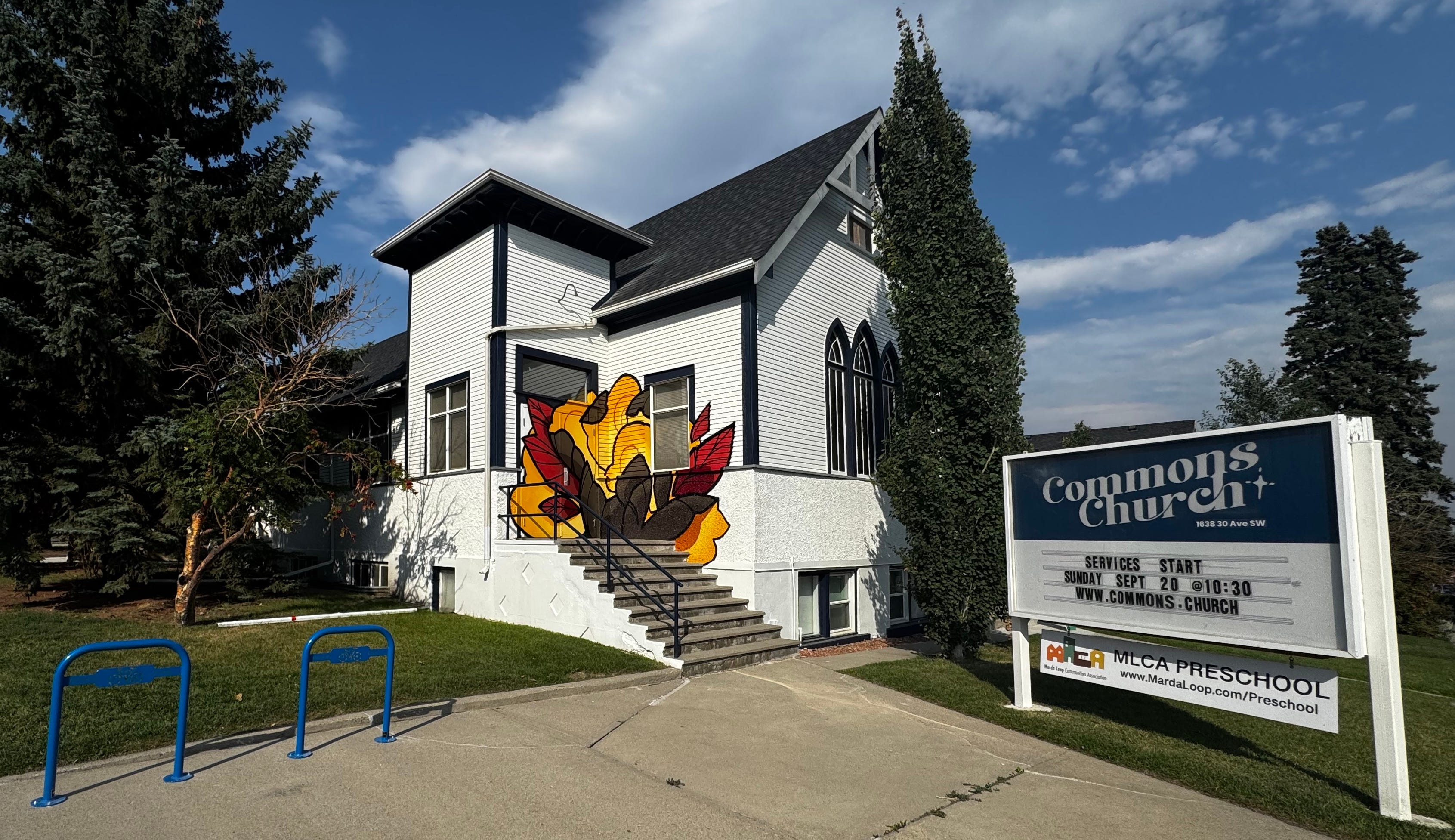
And we’re doing something similar at Commons. We’re getting set to launch our new parish just five minutes south of the river from our parish in Kensington. It’s interesting as a founding pastor to look at the development and the life cycle of a community you were part of founding, and to see it move into a season that’s exciting but also isn’t particularly dependent on you anymore. That’s beautiful. I really couldn’t imagine anything better than getting to watch that happen. But it is a moment to reflect on what I think leadership means to me, all the changes to my thinking along the way, and where my sense of identity sits in the middle of all that.
Here’s the scene in Acts 20 that sparked it for me.
And now, compelled by the Spirit, I am going to Jerusalem, not knowing what will happen to me there. I only know that in every city the Holy Spirit warns me that prison and hardships are facing me… Now I know that none of you among whom I have gone about preaching the kingdom will ever see me again. (Acts 20:22–25)
When Paul had finished speaking, he knelt down with all of them and prayed. They all wept as they embraced him and kissed him. What grieved them most was his statement that they would never see his face again. Then they accompanied him to the ship. (Acts 20:36–38)
A little dramatic but there’s some good stuff in here.
See, this whole section is kind of unremarkable. It’s really just transition point between two other stories. Setting aside, of course, Paul’s somewhat theatrical declaration about no one ever seeing him again. But there’s a few things worst slowing down to pay attention to here.
First of all, just as Antioch and Ephesus and all the other churches that explode in the second half of the book of Acts mark a transition from the original disciples to an expanding story of Jesus in the church era, this moment between Paul and the leaders of Ephesus marks a transition from the first to the second generation of believers.
Remember, Paul helped start a church in Ephesus. He also helped start a riot in Ephesus (Acts 19:23–41). But he founded and grounded a pretty healthy community there, a community he cares very deeply about. And importantly, a community he is now handing responsibility for over to that community, for its own future.
And understand, that is a surprisingly hard thing for the founder of anything to do. Now granted, Paul’s convinced he’s not coming back, so in some sense that makes the transition more involuntary than chosen. But still, there is an imagination for church here that is inherently forward-facing. Paul might not want to hand over responsibility, but he also doesn’t seem to run from it or fear it.
Remember, over the course of Acts, Paul has helped start churches in at least Antioch, Pisidia, Iconium, Lystra, Derbe, Philippi, Thessalonica, Berea, Corinth, and Ephesus. And at this point there are also churches in at least Colossae, Laodicea, Hierapolis, and Rome that Paul didn’t start himself but definitely had a hand in influencing and coaching. And now here he is, preparing to leave Macedonia to return to Jerusalem, saying goodbye to friends and acknowledging, perhaps even realizing for the first time, that everything he had a hand in creating is going to outlast him.
Now that might sound obvious in hindsight, right? Like of course churches outlast their founders. That’s kind of the point. Until you remember that Paul actually spent a lot of his ministry expecting Jesus to return within his lifetime.
In 1 Thessalonians, for example, he writes about we who are alive, those of us who are left until the coming of the Lord (1 Thess 4:15).1 Or over in 1 Corinthians, he talks about how we will all be changed, but not all of us are going to die (1 Cor 15:51)2. That’s because he’s expecting Jesus to return, at least within his foreseeable lifetime even if he won’t see it specifically.
And that means Paul didn’t start churches expecting to ever hand them off. He assumed he would get to see these stories through to Christ’s return.
That’s a pretty interesting wrinkle in this moment, right? That Paul’s not just contemplating his death, which he is. He’s not just saying goodbye to friends for good, which he is. He’s not even just handing off responsibility for a community he helped to create, which he is. Any one of those would make this a pretty compelling moment.
This is also about Paul reformulating his theology in real time.
And by the way, good for him. Like, honestly, has anyone made it this far into their journey of faith without having to reformulate at least some beliefs at some point along the way? For the record, if you haven’t, spoiler, sorry, it’s coming. Because faith is not about getting it right and camping out forever. In practice, faith is largely about finding our way forward in spite of ourselves.
And look, if Paul was figuring out at least some of his theology in real time as he moved through the book of Acts, as he was writing what would become the basis for a lot of our New Testament, then maybe we can find a little bit more grace for ourselves when we stumble our way forward.
But all of that also means this is the point in the book of Acts where the question starts to shift from what will Paul do next, to what will happen when Paul is gone.
And if that dilemma feels familiar, it’s possibly because that’s where the book of Acts started, right? All the way back in Jerusalem on the day of Pentecost, with the disciples asking the same thing about their risen and now ascended Lord (Acts 1:6–11). What are we going to do without Jesus?
Well, now here’s Paul rushing to get back to Jerusalem before Pentecost (Acts 20:16), having just told his friends they’re going to have to figure out what to do without him.
Now, I want to be careful here. I’m not trying to insinuate that Paul is as important to Christianity as Jesus. I think that’s actually a mistake we as Christians have made at times over the years. But what I’m pointing to, and what I think the narrative of Acts is signalling not all that subtly I might add, is that transition and change and trust and the handing over of responsibility is never complete. Because church is never a fixed point.
It’s always evolving. It’s always being handed to someone new. That’s the nature of everything that’s alive, including our communities.
We bump into each other and we impact each other. We learn and we grow together. We welcome people in and sometimes we say goodbye. And at its best, all of that can be beautiful, because that exchange is what enables a community to transcend the individual contributions that any of us make. It’s what allows church to honestly sometimes actually become something almost divine in itself. A living, breathing expression of the body of Christ in the world that is so much bigger than any one person.
And that is certainly something Paul knew in theory, at least. Like, he taught about this beautifully. He illustrates it in Corinthians when he talks about the church as a body (1 Cor 12:12–27). All of these different parts all playing their part. Every single one of us necessary for community to thrive.
And yet the realization that he wasn’t going to get to be a part of the next chapter. I bet that didn’t come easily for Paul. Not because he couldn’t see that it was good or necessary, but because to actually let go and to say, look, I’m not coming back, this is yours now, take it and run with it. I don’t think that’s easy for any of us to do.
Now, thankfully, the test for any of us isn’t about what’s easy. It’s about whether we rise to meet the moment.
And here, Paul does that wonderfully. In fact, I think in some ways he’s a model for the kind of leader who doesn’t hold on too long.
Don’t misunderstand me, I think I’ve got lots of life in my role in my community left ahed of me. But I also want to know how all of open handed enough for it evil in ways I never expected. And I hope I’m privileged enough to get to watch our new parish do just that.
F.F. Bruce has a good discussion of this passage suggesting that the phrase is based down to Paul through the tradition of the early Jesus community and Paul sees himself as part of the we who will survive until the Lord’s Advent but latter changes his mind to “associated himself with those who would die before the Parousia.”
“ἡμεῖς οἱ ζῶντες οἱ περιλειπόμενοι εἰς τὴν παρουσίαν τοῦ κυρίου, “we who are alive, who survive until the Lord’s advent.” The writers rank themselves with those who will live to see the Parousia, referring to them in the first person plural, whereas “those who have fallen asleep” are referred to in the third person. cf 1 Cor 15:52, where Paul says that at the last trump “the dead will be raised incorruptible and we (καὶ ἡμεῖς, ie the living) shall be changed.” In 1 Cor 6:14 (“God . . . will raise us also”) those who are to be raised are spoken of in the first person plural, but no distinction is drawn there between those who have died and those who will still be alive: “us” means “us Christians” generally. By the time 2 Cor was written, however, Paul explicitly associated himself with those who would die before the Parousia and would have to be raised from the dead: cf 2 Cor 4:14.”
F. F. Bruce, 1 & 2 Thessalonians, WBC 45; (Grand Rapids: Zondervan, 1982), 99.
“First, Paul has already expressed himself similarly in his earliest preserved letter (1 Thess. 4:13–18). There in particular it is difficult to avoid the plain sense of the language, that he expected to be among the living at the Parousia. That does not mean that he lived in intense, eager anticipation of it, as is sometimes maintained, but that he simply expected it to happen within his lifetime. Similar language prevails here.”
Gordon D. Fee, The First Epistle to the Corinthians, NICNT; Revised, (Grand Rapids: Eerdmans, 2014), 885-886.
I am confused. Are you leaving Commons in Kensignton to go lead the new Marda Loop work? Or staying and trusting Marda Loop to others. I am not sure what you are saying?